
Our Approach
Most organisations have governance frameworks, risk registers, and reporting processes. What they often lack is an independent view of whether those systems are actually working, and whether what reaches the board reflects the reality on the ground.
Boards receive reports that are designed to inform and reassure. They are polished, achievement-focused, and rarely lead with problems or lessons. For a board operating at a distance from operations, it is difficult to know what questions to ask, let alone whether the answers would be honest.
For funders, the problem arrives the same way. You read the reports, not write them. And often, they're too good to be true.
Horizon Clarity exists for the gap between what is reported and what is real.
The Problem
Many organisations believe their risks are managed, their reporting is accurate, and their delivery is on track. In reality, issues are often softened or delayed before they reach leadership. Risks are known internally but never formally surfaced. Delivery quietly diverges from intent.
These gaps remain invisible until they become operational failure, reputational damage, or loss of trust, usually at the worst possible moment.
Naming the problem is the easy part. The difficulty is knowing which of the available responses is actually viable in your context — and in what order.
What we actually do
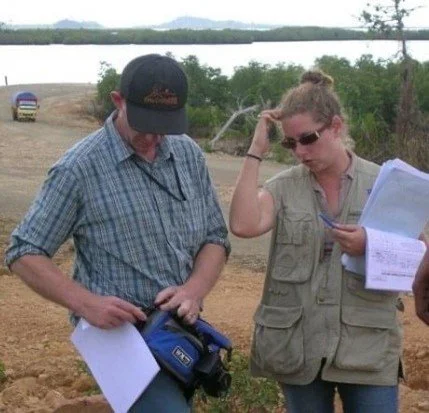
We work with organisations to identify where reality has quietly separated from intent. That means looking at where delivery does not match design, where risks are known but invisible to leadership, where reporting has drifted from what is actually happening, where governance is struggling to identify root causes of problems, and where funding, teams or partnership arrangements are creating friction that nobody is naming.
We do not run generic consulting processes. We use targeted diagnostics based on our proprietary methodology to establish how systems are actually functioning, not how they are designed to work.
We then do the harder part. We convert what we find into a set of options the organisation can realistically act on — tested against your resources, your context and your constraints, not against best practice in the abstract. Leaders receive choices, with the trade-offs made explicit, not a list of things that are wrong.
How a Diagnostic works
Every engagement starts with a scoping conversation, defining the central themes of concern before anything else moves. A mutual non-disclosure agreement is then entered into as a foundational basis for the engagement. This ensures we can speak and share information freely between our two entities.
From there, we review selected documents to form a general picture, followed by a structured combination of targeted interviews across leadership and a strategic selection of ground and mid-level roles. Pattern analysis is undertaken across systems and reporting throughout the process, with additional verification as issues arise.
Findings are distilled into a concise executive briefing, and presented in a working session rather than handed over as a document. The briefing sets out the options, the trade-offs and a recommended sequence, so the meeting ends in decisions rather than in reading. We do not produce lengthy reports. We produce clarity, and a way forward.
What we are not
Horizon Clarity is not a traditional strategy consultancy. We do not write strategic plans, and we are not a compliance function or an audit service. We do not produce lengthy reports that sit on shelves.
Nor do we take over delivery. Your organisation stays accountable for what it does. What we do is stay alongside the people carrying it so the options you choose are actually implemented, and adjusted as reality moves.
Our Core Lens
Every engagement examines the alignment between three things:
Mission and Intent — what the organisation exists to do and what leadership believes is happening.
Operational Reality — what is actually happening on the ground, in systems, and across teams.
Funding and Partnerships — where external relationships and constraints shape what is possible and what is reported.
Where these three diverge, risk emerges. We map that divergence, and set out what can be done about it.
After the diagnostic
Most diagnostic work fails at the handover. The report is accurate, the recommendations are sound, and nothing changes because the people who must act on it are the same people who were already overloaded.
Boards cannot implement. They govern at a distance, and operational detail is not theirs to hold. Chief executives can, but a new or stretched CEO carrying a change agenda alone is the most common point of failure we see.
So we stay. Not as implementers, but as independent judgement alongside the person accountable; through the decisions that follow, for as long as it takes to embed them.